

Rare wine gets marketed as a synonym for expensive, with First Growth Bordeaux and vintage Champagne topping most lists. Genuine scarcity works differently: it depends on hectares, family size and bottle counts, not auction prices. Several unusual styles prove the point, and British journalists keep finding exactly this kind of small-production wine at a specialist cave in Calais, priced well below UK supermarket equivalents.
What actually makes a wine rare (it's not always the price tag)
Why "rare" usually just means "expensive"
It's fair to say that most people treat "rare wine" as a synonym for expensive wine. Investment-grade platforms group bottles under labels like First Growth Bordeaux, vintage Champagne and Grand Cru Burgundy, positioning rarity as a function of auction value rather than actual scarcity. A Premier Cru or a decades-old vintage earns the "rare" label because collectors bid it up, not because so few bottles exist.
That framing leaves out most of what genuinely limits supply: acreage, family size and hours spent in the cellar.
What genuine scarcity actually looks like
Real rarity in wine is a production number, not a price tag. A small estate that ages its cuvée for over 20 months in amphora releases just 600 bottles in a given vintage. A one-hectare vineyard, taken over by a single winemaker in 1982, only started passing to the next generation once his son joined the business. Four young entrepreneurs cultivating barely five hectares of vines count among the smallest commercial producers in their region. A winery founded in the 1990s by a husband and wife team now runs with their two daughters alongside them, still on the same modest plot.
| Definition of "rare" | What it measures | Who uses it |
|---|---|---|
| Investment rarity | Auction price, vintage prestige | Fine wine trading platforms |
| Production rarity | Bottle count, hectares, family scale | Small independent estates |
- A 600-bottle release constitutes genuine scarcity regardless of its retail price.
- A one-hectare vineyard limits annual output far more strictly than any collector's list.
- A five-hectare estate run by four winemakers caps production long before demand does.
Production rarity depends on hectares and family hours, not on auction demand.
UK supermarket wine buying runs on volume and tight price bands, typically £7 to £20 a bottle. That model pulls buyers toward producers who can guarantee large, consistent supply year after year. A family estate releasing a few hundred or a few thousand bottles simply can't fill that kind of order, whatever the quality in the glass.
Once scarcity gets measured this way, the search shifts. The real question isn't which auction house holds the rarest lot. It's which small, family-run producers still sell their handful of bottles for the price of an ordinary supermarket wine, and where a traveller can actually find them.
Unusual wine styles every curious drinker should know
Botrytized wines and the fungus that concentrates flavour
Botrytis cinerea, a fungus that infects grapes right before harvest, shrivels the fruit and reduces its water content. Winemakers press what's left into a syrupy, concentrated juice. Sauternes in France, Tokaji in Hungary and select German regions produce dessert wines this way, and the process only works when humidity and temperature align at exactly the right moment each autumn.
Vin Jaune, Madeira and other styles built to defy time
The Jura region ages Vin Jaune under a veil of yeast, the same technique used for Sherry, giving the wine its signature notes of toasted walnut and saffron. Madeira takes the opposite route: producers heat the fortified wine in warm cellars called estufagem, a process that leaves the finished bottle almost impossible to spoil, even after a century in storage.
Georgia's Saperavi ferments in qvevri, clay amphorae buried underground, a method that predates most other winemaking traditions still practised today. England's own sparkling wine industry, concentrated in the south of the country, has only become commercially viable in the past few decades as the climate shifted in its favour. Ice Wine, made in Germany and Canada, requires grapes left on the vine until temperatures drop low enough to freeze them solid before pressing.
| Style | Region | What makes it rare |
|---|---|---|
| Botrytized wine | Sauternes, Tokaji | Depends on a specific fungal infection |
| Vin Jaune | Jura, France | Years aged under a yeast veil |
| Madeira | Madeira, Portugal | Heat-aged for near-indefinite shelf life |
| Saperavi | Georgia | Fermented in buried clay amphorae |
| Ice Wine | Germany, Canada | Grapes pressed while still frozen |
- Botrytized wine only exists in vintages where the fungus develops under precise conditions.
- Madeira survives centuries in bottle thanks to its heat-ageing process.
- Ice Wine production depends entirely on a hard freeze arriving before the harvest.
Several of these styles turn up, in miniature, on the shelves of small independent wine merchants rather than on auction lists.
None of these styles owe their rarity to a price tag. They owe it to a narrow set of conditions, a specific technique, or a single region willing to keep an unusual tradition alive. That's precisely the kind of scarcity worth tracking down close to home, in a shop rather than a saleroom.
Where to find genuinely rare, small-producer wines near you
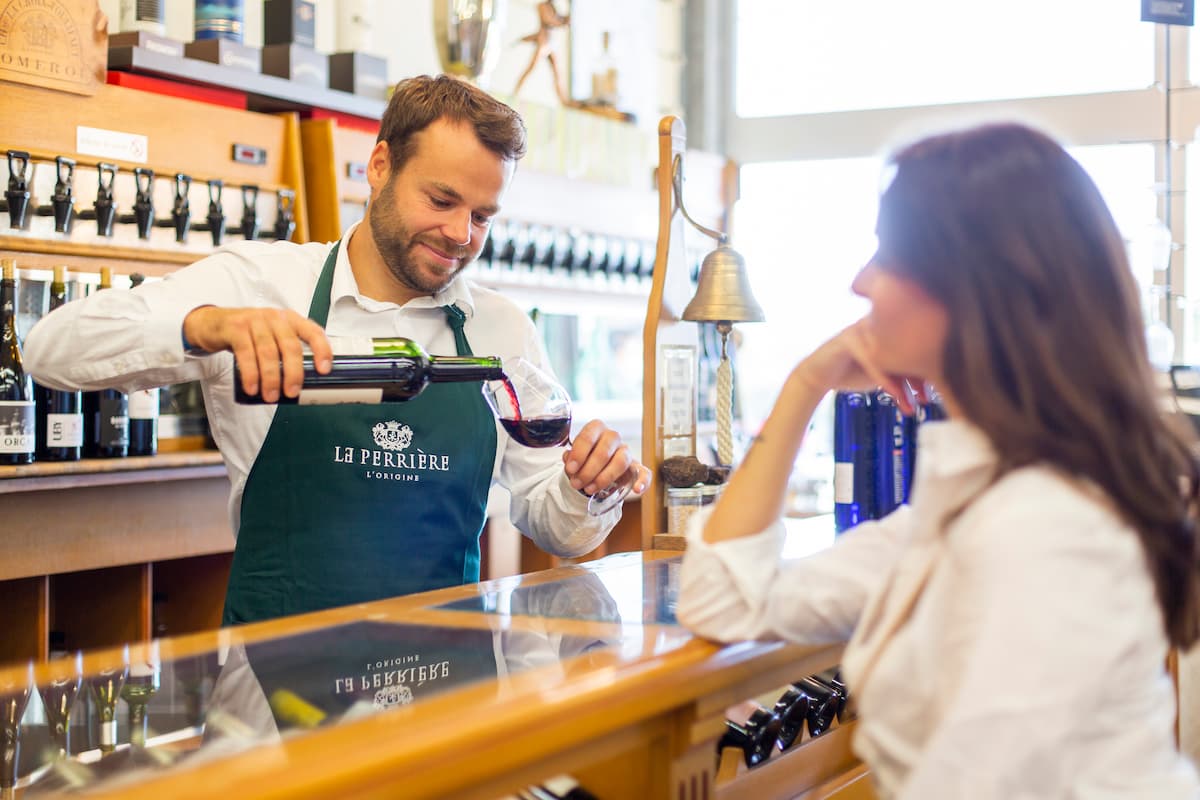
What British journalists keep finding at Calais Vins and Olivier Vins
Calais Vins is based at 28 rue Gutenberg in Calais, with its sister store Olivier Vins on the CD215 in Fréthun, a few minutes from the Eurotunnel terminal. Ben McFarland and Tom Sandham, writing for The Sun in December 2025, quoted Calais Vins co-founder Jérôme Pont directly on this point.
"These aren't wines you'll find in British supermarkets, but the prices are around 40 per cent cheaper than wines of equivalent quality in the UK." (Jérôme Pont, quoted in The Sun)
Jérôme Pont frames the choice of winemaker as part of the same idea. He talks about buying and reselling on fair-trade terms: paying a grower a fair price for a genuinely small-batch cuvée, rather than pushing them toward the volume pricing that supermarket buying demands. For a producer working a single hectare or releasing a few hundred bottles a year, that distinction decides whether the business survives at all.
Esther Marshall, writing for The Express in October 2021, recorded a separate list from Pont, appellations he recommends specifically to British buyers looking past the familiar supermarket names: Fleurie, Médoc, Nuits-Saint-Georges, Meursault, Chinon, Chablis and Pomerol. The Drinks Business reported in April 2024 that Calais Vins saw a 57 per cent rise in British customers between 2022 and 2023, with Pont noting that visitors typically find quality wine priced between 10 and 25 euros a bottle.
The receipts: what small producer wine actually costs
The Independent's Lucy Shrimpton documented specific swaps available in store: a Lirac from Domaine Colombettes at 9.95 euros in place of a Châteauneuf-du-Pape closer to 24 euros, and a Coteaux-du-Giennois Les Charmes at 9.95 euros as an alternative to a 22-euro Sancerre. The Daily Mail priced an even wider basket on a single visit.
| Bottle | Calais Vins price | UK price |
|---|---|---|
| Charles Pelletier Brut Blanc de Blancs | £7.44 | £16.88 |
| Maison Ropiteau Pinot Noir 2023 (6 bottles) | £31.34 | £102.20 |
| Anosteke Saison (75cl) | £3.91 | over £8 |
- Calais Vins and Olivier Vins refund roughly 15 per cent of French VAT to British shoppers on qualifying purchases.
- Every bottle listed above moves through pre-order and in-store collection at Calais or Fréthun, not home delivery.
- Pont's recommended appellations span seven regions, from Beaujolais to Burgundy to Bordeaux's right bank.
None of this requires an auction paddle. It requires a pre-order, a short crossing, and a stop at the till for the VAT refund before heading home. The bottles that several British publications keep singling out are sitting in ordinary aisles in Calais, waiting on the next traveller willing to look past the big supermarket names.
Rare wine worth seeking out is closer than the auction house
Genuine rare wine turns out to be less about auction paddles and more about acreage: a 600-bottle release, a one-hectare vineyard, a family cellar handed to the next generation. Unusual styles like Vin Jaune and Saperavi widen that definition further, while several British publications have traced the same small-production wines to a specialist cave in Calais, priced around 40 per cent below UK equivalents. As UK alcohol duty keeps climbing, the more useful question isn't which bottle carries the highest price tag, but which small producer's wine is still worth the crossing to find.